Wednesday, February 25, 2015

Utilizing Active Learning in Library Instruction

Introduction


Academic Library Instruction has grown dramatically in current times. What was once a card catalog of librarians searching for and delivering specific books to students has become an online experience of self service, utilizing all information formats for research purposes. With reference services changing, the need for accurate instruction of library services and research skill development has changed as well. Instruction librarians use many different teaching methods for their students, both in one-shot instruction and in long-term instruction.
In current times, these different methods have taken a more active role rather than lecture based. Since the late 1800’s, library instructors have noted how lecture-based learning has failed students. “The assumption that library instruction should be lectured based probably has driven the opposition of many academic librarians to library instruction. After all, if lecturing to students about library use does not work, why do it? (Lorenzen, 2001).” Instead, many academic libraries are turning toward active learning in the library classroom for instruction purposes.

What is Active Learning?

Source
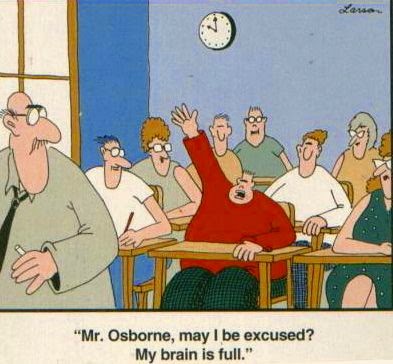
            Active learning, in essence, employs instructional methods opposite to that of passive learning. Passive learning teaching style engages a lecture-based learning with heavy note taking and memorization. It relies strictly on a one-way learning from teacher to student (Holderied, 2011). Active learning, on the other hand, “has struck a chord with educators for the way that it enables instructors to accommodate varying learning styles and encourage active participation of students” (Bonwell and Eison, 1991). It takes the student beyond the role of the listener and engages them to be more proactive in their learning. By employing a variety of techniques, including small group discussion, hands-on activity, and role playing, the students become involved in discovering for themselves the answers to their research and library needs. This allows them to have the first-hand knowledge of the necessary skills and the ability to utilize them in their academic careers.
          The push for active learning in the library classroom in modern times have come from three voices. In 1991, David Johnson, Roger Johnson, and Karl Smith wrote a book entitled “Active Learning: Cooperation in the College Classroom” and began their campaign promoting active learning as an essential part of library instruction. Their findings revealed that students have trouble focusing on lectures and that their focus weakens over the time period of the class. They also found that students found lectures, frankly, boring. Lectures might promote the rote memorization of facts but do not utilize a student’s higher functioning such as their analyzing and synthesizing skills (Lorenzen, 2001).

Drueke and the One-Shot Active Instruction


          In 1992, J. Drueke wrote an article entitled “Active Learning in the University
Library Instruction Classroom.” Within the article, he notes four barriers of active learning in the library setting. For one, librarians usually see a group of students only once and are not their usual teachers. This ‘one-shot’ instruction makes it difficult to fit all the necessary ideas into the short time frame without lecturing. Students also find librarians to not be a source of information because they are not their usual teachers. This creates a sort of mental block from forming the information presented to them during the instruction. Another barrier is the sheer lack of time to cover all the material necessary in these ‘one-shot’ instruction. Many librarians feel that an active learning approach will take away precious time that is needed to actually teach the material. Finally, the instruction librarian does not have total control of the class and their material. The primary teacher usually comes into the instruction time with requirements and suggestions of topics to cover, putting the librarian in a more subordinate teaching role. The materials covered would, in theory, be controlled completely by the library instructor. However, any good library instructor would know to structure their teachings to fit the needs of the students.
Source
          Another large obstacle is the instruction librarian’s reluctance to employ active learning in the classroom.
C. E. Mabry said: I found, however, that the instructor's first step in applying cooperative learning techniques involves rethinking his/her role in the classroom. It is not easy to give up lecture time in a 50 minute BI session. But one of the primary tenets of cooperative learning is that, if instructors are prepared to give up some control, students will learn more and retain that knowledge longer. (p 183)

          In order to combat this lack of control and the desire to stay with the lecture-based learning, Drueke came up with nine strategies of active learning for librarians:
I. Talking informally with students as they arrived for class.
2. Expecting that students would participate and acting accordingly.
3. Arranging the classroom to encourage participation including putting chairs in a cluster or circle.
4. Using small group discussion, questioning, and writing to allow for non-threatening methods of student participation.
5. Giving students time to give responses, do not rush them.
6. Rewarding students for participating by praising them or paraphrasing what they say.
7. Reducing anonymity by introducing yourself and asking the students for their names. Ask the class to relate previous library experiences as you do this.
8. Drawing the students into discussions by showing the relevance of the library to their studies.
9. Allowing students time to ask questions at the end of class.
          These strategies, when utilized by the librarian, show that a little effort can turn a one-shot library instruction into an active library experience. Employing these tactics can improve the students’ instruction quality and their learning outcome.

Conclusion


          Active learning can take a student from a role of a listener into that of an initiator in their own learning. This can dramatically affect the amount of information retained from library instruction, particularly in one-shot classes which most academic libraries now employ. With active learning, students are engaged in their own education. With a bit of work to their curriculum and teaching style, librarians can enlist their students to learn further than in lecture-based forums, utilizing the analytic and synesthetic skills in the process.


Source

References


Bonwell, C.C. and Eison, J.A. (1991). Active learning: creating excitement in the classroom. Washington DC: The George Washington University (Eric Clearinghouse on Higher Education).
Drueke, J. (1992). Active learning in the university library instruction classroom. Research Strategies, 10(Spring), pp. 77-83.
Holderied, A. (2011). Instructional design for the active: Employing interactive technologies and active learning exercises to enhance library instruction. Journal of Information Literacy, 5(1), 23-32.
Johnson, D., Johnson. R. and Smith. K. (1991). Active learning: Cooperation in the college classroom. Edina, MN: Interaction Books.
Lorenzen, Michael. (2001). Active Learning and Library Instruction. Illinois Libraries, 83(2), 19-24.
Mabnv. C. E. (1995). Using cooperative learning principles in BI. Research strategies, 13(Summer),182-185.

Wednesday, February 11, 2015

Even the Apocalypse Can't Stop These Librarians


Source

There is a whole lot of post-apocalyptic hysteria going through today’s pop-cuture. From the Walking Dead/Last of Us zombie craze all the way to the Divergent/Hunger Games Orwell-did-it-better worlds, for some reason modern viewers want to see what happens next. I don’t know if this is a craze of a fantasy future or is people are really seeing the end times coming.

Naturally, my plans in the post-apocalyptic survival involve a library. That is the only reason I ask: What does happen to all the libraries?

Within the post-apocalyptic literature, there seems to be two different types of future. One has a more fend-for-yourself/everything-is-destroyed/all-your-friends-and-family are gone feel. The other has the 1984 and Big Brother situation. My view of the apocalypse is the first one. If something happens, everyone will panic.

But what happens to the libraries?! What happens to knowledge?! In a world where most of our items are stored in a cloud, what happens when the electronics all run out of charge?

Enter two of my favorite, and extremely unappreciated librarians: 3 and 4 from the animated movie 9.

Source

For those of you who are not familiar with the movie, 9 began as a short film by Shane Aker and was quickly gobbled up by Tim Burton and his crew. Premireing on 9-9-09, the movie begins after the humans have all been destroyed by a toxic gas war. Only the machines remain.
In the final days, a scientist mixed technology and magic to transfer bits of his soul into 9 poppets in order to live on and rebuild humanity…..somehow. The movie is not one for details and has some huge holes. However, its animation and voice acting are sublime. Its typical Tim Burton creepy feel also makes it totally worth watching if at least once!

Talk about a dire situation. There are literally no humans left on the planet. There is no one left to spread the knowledge to. But these two work tirelessly to catalog the apocalypse anyway, using their own system that functions despite the lack of computers and despite the fact that they are the size of a soda bottle. Just take a look at the following clip to get a feel for it:


I find it inspiring that when the scientist transferred his soul into the poppets, he had to use two of them to fill up his thirst for knowledge and preservation of information. If I was to transfer my soul, I too would hope to fill more than one doll with my skillz.


Let’s just say that in a future that looks this bleak, I am glad to know that the twins will be there to make sure that the knowledge of humanity will live on.

Me when I see someone good-looking

Wednesday, January 21, 2015

Tammy Swanson: Parks and Recreation's Sexy Stereotype

A ruthless sex-fiend, Tammy Swanson (Tammy II) from Parks and Recreation is what every “sexy librarian” would be if they couldn’t turn it off in the real world.
source
She is a master of sexual seduction that Ron Swanson cannot deny-and she uses his desires to her full advantage. She is as Ron describes, a “manipulative, psychotic, library book peddling, sex crazed, she-demon.” Tammy first appears in "Ron and Tammy", when she lays claims to Lot 48 in order to expand the library to another branch. A bit of trivia: The actress who portrays Tammy 2, Megan Mullally is actually married to Nick Offerman, who portrays Ron Swanson.


Source
Librarian Stereotypes says, “For women working in the field, the ‘sexy librarian’ is perhaps the most demeaning, infuriating stereotype because it degrades the woman from being a normal person doing their job to a sex object that is there only to look pretty. As such, this stereotype seems to be the one hardest to overcome for me personally, but also for the profession overall.”

I actually disagree with this notion. 

Even though Tammy II is an over-sexualized bitch, she shows that librarians have a wide range of personalities. She is also quite a strong and interesting character that watches out for her own interest and the interests of those who work for her.  Her sexualized stereotype is so over done that it is absurd! It takes the stereotype and does not forward the notion but instead pokes fun at the very idea of the “over-sexed” librarian.

Source

Wednesday, January 7, 2015

Paranormal Series: The Silver Kiss by Annette Curtis Klause

Paranormal Series: A series of literature reviews of Young Adult Paranormal Romances. 


Curtsy of Goodreads

Sixteen-year-old Zoe is having a seriously hard time with her life. Her mom is battling cancer in the hospital, and losing. Her father is overwhelmed with the impending death of his wife, and best friend is moving so far away that they will not be able to see each other very often. In the middle of all this torment, Zoe meets Simon. Simon is a vampire seeking revenge for the death of his mother and his own turning against a most unusual antagonist. Together, will they be able to stop this criminal before he leaves a further string of bodies around Zoe’s town?

curtsy of wildisonmyside


In Annette Curtis Klause’s debut novel, she explores grief and the loss of close family in a pretty paranormal romance wrapping. It goes into some pretty hard details of Zoe’s emotional state during all the events of her life. The book is short and easy to read for younger audiences. There is still some violent descriptions, but not near the graphic detail it could have been. The murder, however, is a young child-be warned.


In ending the book, I wondered how this did so well when it did not go by the typical formula. In fact, they DO NOT end up together in the end. He is not a vampire that has chosen her as a mate and stalks her until she loves him back. In the end, he has finally killed his brother (the young child) and has avenged the death of his mother. His soul is able to move on and be at rest, kind of like a ghost more than a vampire. He moves on (hopefully to a better place) while she returns to her father so they can band together in the slow and painful loss of her mother. It was then that I looked at the copyright date. The Silver Kiss was published in 1992, many years before the Twilight novels. Could this have some effect of it? Is the popularity of Twilight affecting the plot choices of present and future paranormal romances?


My score:


Wednesday, December 31, 2014

Paranormal Series: The Vampire Academy by Richelle Mead

Paranormal Series: A series of literature reviews of Young Adult Paranormal Romances. 


Don't let the cover fool you- she looks nothing like this in the book.


There is a world within our own. Within this world reside a race of royal and non-royal vampires called Moroi, and their guardian race of half Mori, the dhampirs. Rose Hathaway is a guardian-in-training at a secret school for Moroi and Guaridans in rural Montana along with her best friend, Lissa Dragomir, a Moroi princess and last of her line. After being on the run from the school officials for two years, the girls are forced back to campus and the Moroi world to finish off their schooling together. However, the girls have a secret. Using a Moroi ability that has not been seen in hundreds of years, Lissa was able to bring Rose back from the dead, bonding Rose to her mind and emotions. This powerful ability comes with a price and Lissa's sanity remains in the balance. Meanwhile, our protagonist, Rose, must finish out her training to guard the Moroi against the violent and unsound Strigoi which want to see an end to the Moroi way of life. In order to catch up on lost time, she must take extra fighting classes with a new guardian trainer, Dimitri. Romantic tensions rise between the two until Lissa is suddenly kidnapped and Rose must go after her best friend before it is too late.


Talk about starting off with a bang; where has this series been all my life? This book seems to have a double layer of antagonism within its pages. On one side, there are the Strigoi and evil Moroi that wish harm on Rose and Lissa. While these antagonists are the more obvious foe, they seem to have simple methods to face the issue: violence. On the other side, however, is the underscored, teen-relevant issue that plagues Lissa leading to cutting and other self-destructive behavior. Richelle Mead delicately weaves notions of self-harm and the importance of getting help in the situations. More importantly Mead makes sure to state that it is not the fault of the one who suffers in how they deal with their suffering.

Rose Hathaway, being half Turkish and half Scottish, is the first main character in my quest to have some diversity. She is noted with dark skin, black-ish hair, dark eyes, and womanly curves. It is a breath of fresh air in my mind's eye to envision a main character that does not look exactly like the character in the last book I read.


St. Vladimir- patron saint of blood suckers apparently
Rose, while an impressive bad-ass in her fighting ability, does make some pretty poor choices in the book and in how she deals with Lissa. Many of the issues faced could have been solved if she was just honest with an adult about them. But, I think that is what makes a good teen point of view. Rose does learn about her mistakes and does eventually elicit Dimitri's help in the matter.

As for the Dimitri love interest, he is the perfect Russian cliche for her to be crushing on. He seems to have little personalty (in this book at least), and is much older than Rose. Older enough, in fact, for their love (sex included in book 3) to be considered statutory rape between a student and teacher. Honestly, this bothers me a whole lot. I don't know if Mead was trying to make a point or something, but this could have been easily fixed if Rose had her birthday earlier than the sexual act. That way if would be awkward, but not so highly illegal. I can understand a 17 year old girl being blinded by love for her teacher (I was a teenager at one point), but a 24 year old man should honestly know better. At least he should understand that if he truly loves her and wants to be with her, then they can wait a while. The only reason I can think of for this is maybe the pressing feel of the short life of a guardian? They do tend to die early because of the constant fighting.

That being said, there obviously some sexual moments (nothing pornographic) and some language so I would note that for younger-young adult readers.

By the way, I also found out this was made into a graphic novel. I will try and do a separate, quick review of it later but it looks awesome!

My score:


References:

book cover of the novel Vampire Academy, by Richelle Mead and published in 2007. Jacket design was done by Emilian Gregory, the cover artist. The publishing company is a branch of Penguin Group called Razorbill.

http://www.penguin.com/static/packages/us/yreaders/vampireacademy/home.php  for further information on the series


Monday, December 15, 2014

Paranormal Series: The Hallow by Jessica Verday

Paranormal Series: A series of literature reviews of Young Adult Paranormal Romances. 


Poor Abbey has just lost her best friend, Kristen. Prepare to hear about it for 513 pages. Abbey lives in Sleepy Hollow; yes, THAT Sleepy Hollow from the Washington Irving book. She enjoys making perfume, drinking a tad too much hot chocolate for a normal girl, and visiting graves to talk to dead people, such as her friend Kristen. It was at one of these daily trips to the cemetery (you know, like normal teenage girls do) that Abbey meets Caspian. Caspian has intensely green eyes and a dark streak among his strikingly blonde hair. She instantly falls for him. But what could he be hiding...?


This book is pretty terrible among the YA PR world. Jessica Verday has a great setting for a spooky ghost romance and instead spends 480 pages telling us that Abbey goes to school and back home.

There is just way too much build-up, it is utterly boring. In fact, you do not even find out what Caspian is until the epilogue. There is no antagonist at all. The book ends with her going to live with her aunt because she feels crazy, leaving Caspian behind. Is she the only one that can see him? Why is he here? Why do we even care?

Another issue is the guy. I like my PR's like I like my HBO shows: full of drama. The guy needs to defy the norm for teenage boys because they are immortal badasses that are obsessed with this one, plain, girl and teeters on that line from protective to abusive in their love. That is what I like in my PR men.

But Caspian seems childish and boring. He doesn't want to protect her and doesn't do the whole "I can't stay away from you" thing.

To leave on a good note: it was unique to see a more realistic reaction to the events. "This guy that I have been secretly been seeing kinda treated me like trash then told me he died last year" --moves to live with aunt because obviously snapped from the pressure.


My score:

Wednesday, July 9, 2014

Come On, Rain! -A Review

This last week, I chose to read Come On, Rain! by Karen Hesse and illustrated by Jon J. Muth. In this story, award-winning author Hesse and artist Jon J. Muth deftly capture the magic of a sudden rainstorm on a swelteringly hot day in the city. Much more than about weather, Come On, Rain! also portrays quality mother-daughter relations, urban society, and the spiritual nature of the world around them. The culture portrayed in the book is African American, but also city-life. Both of these are cultures I am quite unfamiliar with.


The story follows Tess, a young black girl of the urban city who has to deal with a swealtering heat of the season. Hesse makes you feel the heat in her descriptions of drooping plants and panting cats. Everyone is affected by the amount of the sun. Tess hopes for rain. When it finally comes, she and her mama celebrate outside, dancing with other mamas and their daughters until the rain has passed.
Muth's sunbaked watercolors perfectly convey the washed-out, drought-stricken world, while Hesse's gripping narrative keeps children and adults alike entertained and involved. No offence to the writing and story, I greatly enjoyed it. However I feel as though the illustrations made this book stand out. Tess is perfectly pictured as bird-like from the very beginning. Her momma, however, never shows her face. I am not sure if that means anything, I just noticed it. His background water colors make the paintings go from hot and smoggy to rainy and cool. Tess has multiple friends from multiple races which don’t necessarily play a part to the story, but is accurate in a city environment. However, when the hands and feet are pictured by themselves, their race is pretty much unknown because of the colors he chose to use. It is because it does not matter; red, yellow, black, white, purple, everyone is affected by the heat and welcome the rain together. Everyone can enjoy the weather together. I also love how the mother-daughter relationship is shown side-by-side with a white mother-daughter in the pictures to show that there is no difference.


All around, this book was excellent. It has a black lead female but it does not make it all about race. It could have easily been a Portuguese child in my opinion and still have been a good book. I would love to share this with my kid one day.

Sunday, June 22, 2014

Wait, How is Your Character White if You are Black? -writing outside of one's culture

In a perfect world, each culture would have its own literature translated for all to read. We would be able to “walk in each other’s shoes” through their stories and writing styles. Everyone would be open-minded enough to gain something, anything out of these stories. However, this is not a perfect world.


So, the question has been raised: can someone write outside their own culture?


Many would say yes, and many would say no; it is quite the divided topic. Those against it say that there is no possible way for someone outside the culture to truly understand what it means to be a ‘part.’ They may study it and learn its history, but they will never feel the culture as a lifestyle because they will never be a true member of it. Those for the idea have different takes on the subject. Henry Louis Gates Jr. says “no human culture is inaccessible to someone who makes an effort to understand, to learn, to inhabit another world.”


It is this quote that made me think past the realm of the ‘perfect world’ scenario I proposed and into reality. There will never be a culturally authentic writer for some cultures. Should these cultures just, disappear then? Or should we make an effort to learn as much as we can and use these highly complex neurons of ours to try and place ourselves in the closest situation we can?


I would also like to add this sentiment. If we are limited to
writing only about our own cultures, where does creative writing come in? Where is fantasy? How am I supposed to write a fanfiction shipping a Klingon character with a Romulan in a heart-felt love story across two warring peoples? I promise you, I am neither Romulan nor Klingon. However, I know an extensive amount about both character’s cultures enough to actually teach a class on the subject.


 Along these lines, should we limit teachers to only teach their own cultures? My cultural anthropology class in undergrad was not taught by someone who was a member of any of the tribes that we studied. Does this mean that we cannot learn from him and his knowledge? Does the fact that he is not a member of this culture mean that he can never understand it?


Which brings us back to the beginning. Personally, I believe people
can write outside their cultures. Yes, I would prefer to read a biography of a black child growing up in the 60’s, but that does not mean that I cannot learn from a Latina woman writing a story of a black child growing up in the 60’s, or a white man writing. If I am unable to learn about the race in the story, the least I can learn is how the author views that race. 

It is why we, as humans, have the ability to think critically. It is why we need to review author’s background while judging authenticity. Did he just watch a show on the history channel and think he knows every black plight? Or did he do extensive research on the subject, talk to people who lived at the time, and still admits to not knowing everything? 


If we were to say that only cultures can write about themselves, well I think that is just lazy of us.


Monday, June 16, 2014

Rupert Giles: How to Slay the School Library Profession

The character of Rupert Giles, played by Anthony Stewart Head, will forever rank among the top of the "fan favorites" list.
This charming, witty, British tongue whips men and women alike into frenzies while his character depth and development leaves not even critics to be desired. Though Giles is a consistently important cog of the Scooby team, he does seem to often leave behind one crucial part of his identity: his profession. I am fully aware of the many complexities of Giles's story arcs, however, for the purpose of this essay, I am limiting the scope to include only Buffy season 1 through 3 in order to reflect his time as the librarian at Sunnydale High School. You know-before it literally became Hell.

Rupert Giles devotes his time and effort as a Watcher and noted Buffy father figure, but how does he measure up to the position of school librarian? For those of you just looking for a bottom line: pretty poorly. Though the American Library Association (ALA) does not have concise criteria for being an A+ school librarian, there are several suggestions and a clear concession by those powers that be within the profession on what makes a good school librarian. The good school librarian must have a good collection development, a professional and friendly reference demeanor, must be up-to-date on the technology of the times, and must engage in teacher collaboration for the good of the students and their literary development.

For those who work for the state in any profession, you are aware of the money binds that are placed like shackles around your neck. Yes, they allow you to buy things for your job, however everything must be justified. For this reason, school librarians spend hours looking for new books and reference materials for their student's age group to supplement their libraries. I am currently in a class in which I am learning how to choose diverse children's books in order to avoid racism and sexism while still portraying the many, many cultures of the student body and the world. If we were to follow this line of thinking, Giles, being a high school librarian, should want to use the school's tax-payer money to find great sources to develop their research skills. Those few that survive high school must be strong so they may want to go to college one day. Well, those students who actually care about their grades and future will be thoroughly disappointed. First, there were obviously few books within the library. Second, whenever they were doing research on whatever paranormal entity was attacking, they were noticeably looking all over the library for information. Are all the books in the Sunnydale Library about the occult? Is there no literature, computer development, SAT Prep whatsoever? John Cullen in his articles, "Rupert Giles, the Professional-image Slayer," said it best when he stated, "Giles stocks his collection with occult works irrelevant to the wider student population he is supposed to serve" (42). Some may say his use of school money solely for Buffy's reference is a good thing, better for the whole of humanity and all. However, those high school students are going to graduate and not know a thing about essay writing, common literature, logical skills, or anything that can truly help them in the real world, through collections or through reference assistance.


One of the most important trends in the modern library is to have a friendly atmosphere and reference. No longer is it the age of buns, shushing, and the anti-social librarian.
In library school today, master's students are taught on being welcoming and social beings in order to assist patrons of all types, ages, and cultures. School librarians are vitally important to the knowledge development of the students. In fact, Topsy N. Smalley, in the article entitled "College Success: High School Librarians Make the Difference," it is concluded that, "Within the last decade, research has provided solid evidence that school library programs- ones with credentialed librarians, where librarians partner with school faculty, and whose libraries have sufficient staffing and collections-contribute to student achievement" (193). Well, Giles, being the only librarian, must work extra hard to give every student his full attention in order to help them fulfill their potential, right? Actually, Giles is never seen helping an average student with a research project. In fact, he is genuinely surprised to see students even enter the library. His reference skills when it comes to Buffy's mission are unparalleled. "He bridges the chasm between the information as it lives in the text and the transfer of that information into a form the Slarerettes and Buffy can actually use" (Wandless, par. 6). This is the definition of good reference work, if he would only use it for more than just Buffy. His Watcher duties would not negate his duties to the other students whom rely on him to be their librarian. Though it is just the 90’s, he should be building students’ knowledge of reference materials and the use of the internet which is obviously the future.

Another staple of the good school librarian is the knowledge of library technology and the willingness to learn more. I realize that for Giles, the idea of using a computer may be a touchy subject given that it would remind him of Jenny and her sad demise. However, he easily perpetuates the male librarian stereotype of being technologically inept, even confessing that computers fill him with “childlike terror” (“I Robot, You Jane”). He is confused that this glass box could be a tool for searching and knowledge just as books and volumes.


Again, I realize that it is not the digitized world that it is today, however school librarians play the role of the best (and sometimes only) source for technological development in the academic sense for their representative school.  He is the only link some teachers might have to the developing technological world around them, and he is not even willing to learn. The few students who graduate and desire forwarding their education are out of luck if they do not know how to use basic search functions.

Lastly, a good school librarian works in conjunction with teachers for the good of the students. They know what each English teacher will teach in a given semester in order to stock the library with guides and assistance. They will promote literacy and library learning through marketing techniques like library fun days, posters, challenges, and alike. They will actually want students in their library. According to the ALA’s State of America’s Libraries Report 2014, “School librarians are highly involved leaders playing a critical role in their schools through consistent and sustained collaboration with other educators” (ALA). Modern librarians even offer classes for teachers and administrators on library instruction, research, and some technological uses. Aside from Giles’s romance with Mrs. Jenny, rarely is he seen interacting with other educators that Sunnydale High School must have stashed somewhere. Though the many principals do make appearances, those who watch the show know that principals are rarely good guys just there to assist the students in their learning futures. They often die grisly deaths as well. The point being made here, however, is that Giles does not even try. Giles does not even seem to care about the student’s learning environment or their lives outside of the school.


I am fully aware of the impact having Rupert Giles as a librarian has done on the profession’s popularity. GraceAnne A. DeCandido says, “Here is a librarian model who is elegant, deeply educated, well (if fussily) dressed, handsome, and charged with eroticism” (45).  However, I believe John Cullen said it best when he said, “We juggle technology, management, customer service, scholarship, and public relations constantly. We require a graduate degree because only the best and brightest need apply. If Giles actually spent one day fighting the battles that real librarians face, all the bloodcurdling demons in hell wouldn’t faze him” (42). Rupert Giles is one great Watcher, but he fails as a school librarian. As he fails, so does his students. 


Cullen, J. Rupert Giles, the Professional-image Slayer. American Libraries, 31, 42. Retrieved May 15, 2014, from the Academic OneFile database.

DeCandido, G. Bibliographic Good vs. Evil in Buffy the Vampire Slayer. American Libraries, 10, 44-47.

Smalley, T. N. College success: high school librarians make the difference. The Journal of Academic Librarianship, 30, 193-198.

School Libraries. (n.d.). American Library Association. Retrieved June 16, 2014, from http://www.ala.org/news/state-americas-libraries-report-2014/school-libraries

Wandless, William. "Undead Letters: Searches and Researches in Buffy the Vampire Slayer." Slayage: The Journal of the Whedon Studies Association 1 (2001) [http://slayageonline.com/essays/slayage1/wandless.htm].

Wednesday, June 11, 2014

How Net Neutrality Bans Could Affect your Library


Those of us who curl up with our fluffy pets and fluffier husbands and watch the evening news (or in my case the Colbert Report)
are aware of this not-so-new concept of Net Neutrality and how it is making headlines. Like the 90% of viewers out there, my first thoughts were not egregious outrage, nor was it clapping approval; no, my first thoughts were..."what is net neutrality?" "uh-oh, should I know this?"


Well, for those of you who don't know what net neutrality is nor why it is in the news, take heart and do not fear for the ALA already has a stance on to tell you how you think! Now, I will ever so lightly explain to you librarians, teachers, and other information enthusiasts what net neutrality is and how it can affect libraries and information presentation. While I will not go on a terrible rant about my personal stance on the matter, it will be pretty obvious how I stand on the net neutrality thingy.


What is Net Neutrality Anyway?????


Net Neutrality (NN) is basically non-discrimination on the online world. "But New Pagemaster, the online world is full of discrimination!" Yes, yes it is. However, in this instance, we are talking more about who can get on what websites and how fast. 

"It is the principle that consumers/citizens should be free to get access to - or to provide - the Internet content and services they wish, and that consumer access should not be regulated based on the nature or source of that content or service. Information providers - which may be websites, online services, etc., and who may be affiliated with traditional commercial enterprises but who also may be individual citizens, libraries, schools, or nonprofit entities - should have essentially the same quality of access to distribute their offerings." -ALA website 

Without NN, the people of whom you pay big bucks in order to get online can charge more big bucks for certain websites. Heck, they can even ban websites from their services if those websites do not comply with money, do not advertise for them, or if they just don't like their face. These big companies will be allowed to give faster service and more bits to those who can pay more.


Affects on Education and Academic Libraries


If NN is banned by the FCC, that gap between the "nice" public school in town and the "not-so-nice on" will grow an amazing amount. This is because of the already stupid law that is in place that basses school funding on the kids test scores.
So, let us brainstorm a bit:  
low test scores = less money, less money + better education websites costing more = less education websites, less education websites = low test scores. 

You get where I am going with this. Those schools that are already having a hard time will have an even harder time getting funding, widening the gap between the educational rich and poor. 


Why would education websites cost more?


Well, this is because these good education websites already provide so much free or low-cost stuff that they cannot pay your bill anymore. What the end of NN will see more of is the rise of already big businesses, just online. Do you like Mickey Mouse? 'Cause you will see a whole lot of him soon. Entertainment websites that already make bank can cozy up with the internet providers. Friends like Friends with money. The Entertainment world has money. 


Affects on Public Libraries


Public libraries could face higher service charges for newly premium online information and services. In a time of tiny budgets, paying more for more internet access would require tradeoffs such as fewer books, staff, and open hours. Hopefully, the public libraries will still be able to offer community services to the lower income (heck even higher income) public. Have you ever looked and seen what your public library can do for you? Look it up, you will be surprised what all your missing.


In Conclusion...


The blog post above is just a taste of the massive complexity that is Net Neutrality and its effects. Some say there are some upsides to it as well. Feel free to look them up, I haven't the time to rummage through the internet garbage. Below are some good links for further understanding if you want to know more. Otherwise, I hope I did explain a bit about what is going on so you can at least sound like you know at your next staff meeting.


https://journal.lib.uoguelph.ca/index.php/perj/article/view/1133/1709#.U3uiDHa2xI0

http://www.ala.org/advocacy/telecom/netneutrality

http://www.washingtonpost.com/blogs/the-switch/wp/2014/01/15/11-questions-you-were-too-afraid-to-ask-about-net-neutrality/

http://thecolbertreport.cc.com/videos/nnj3ic/end-of-net-neutrality